Pick the violets, rinse and drain. Place in a bowl and cover with boiling water and a drop of lemon juice. Cover and leave overnight. Drain and save the purple water into a pot. Add equal parts of sugar (I had 200ml water, 200g sugar). Boil until the syrup bubbles and add the violets. Patiently pick them up with a teaspoon and let the dry (it may take a few days). I used the leftover sugar to candy chestnuts, but any other fruit would do. Store your violets in a jar.
Showing posts with label Foraging. Show all posts
Sunday, April 5, 2026
Thursday, November 20, 2025
How to forage and cook bamboo shoots
Nothing like freshly foraged bamboo!
I live in the Waitakere Ranges and there is quite a bit of bamboo here, mostly considered a weed, but as you know I eat quite a few weeds, and this is no exception. I have some in my driveway too, but I tend to walk down to the neighbour, who has some really big clumps of big bamboo! Or it brings it to me, since he sees when new bamboo shoots up... you have to be quick picking the shoot, once they are out of the ground they grow very quickly! The image below is the maximum length allowed.
I started cooking bamboo shoots when I was living in Japan, they were different kind, much 'fatter' but these are good too, better than buying canned bamboo! Peel off the outer green layers, then cut into slices (I also like to cut the tips into two to see the layers), and discard the hard nodes. Rinse and cook for about 20 minutes in the water left over from rinsing rice (or add a little rice bran to your cooking water, I don't have rice bran so I keep the rice rinsing water), a pinch of salt and a chili (optional, but apparently it takes away the bitterness). 20 minutes suffice for small tender shoots, but if you have longer ones just make sure that you can pierce them with a knife or leave 5 minutes longer. If not using immediately store in lightly salted water.
The tips (the best part) can be served as a side dish for a Japanese dinner, the round bits are good in stews and stir fries, but I tend to cut off and discard the nodes, which are harder (I do this before cooking the bamboo shoots if small and tender, but after when my neighbour brings me big long shoot which are quite hard to cut).
For this stir fry I used bamboo shoots (previously cooked as above), oyster mushrooms, and carrots. Heat a little vegetable oil with a few drops of sesame oil, add a tsp of mince ginger and then the chopped vegetables. Cook for a few minutes, stirring, then add a tbsp of lemon juice and 2 tbsp of Japanese soy sauce, lower the heat, cover and simmer for 6-7 minutes, stirring from time to time. Add chopped coriander at the end (optional). Serve with rice.
Happy weekend!
Photos and Recipes by Alessandra Zecchini ©
Sunday, September 21, 2025
Brown lentil salad with onion weed
It is onion weed time again! Possibly one of the easiest plants to forage in New Zealand because it grows like a weed in many gardens and fields - so you can pick it and weed the garden at the same time.
Bulbs, stems and flowers are edible (discard the flowers with the hard seed though, a bit tough). Eat raw or cooked. Here I used it in a brown lentil salad, just cooked lentils, olive oil, lemon juice, salt and chopped raw onion weed. Quick, easy and delicious!
Photos and Recipes by Alessandra Zecchini ©
Saturday, July 19, 2025
Fennel salad with chicory flowers
I am not a huge fan of chicory, but I love chicory flowers. And I love fennel salad. I generally don't mix fennel with other vegetables, unless it is lentils (I love lentil salads with fennel). Usually I really like to keep a fennel salad nice and simple, dressed with a pinch of salt and a drop of olive oil. But it is so ... white! To make it more 'photogenic' today I added some chicory flowers I have foraged in my field in the mountain. They only have a tinge of chicory taste which goes well with the sweet and aniseed taste of fennel. Good combo for digestion too :-)
Pick the flowers and drop in a bowl of water to rinse, then on a paper towel to dry. Sprinkle the petals over your favourite salad (not necessarily a fennel one).
Photos and Recipes by Alessandra Zecchini ©
Labels:
edible flowers,
Fennel,
Flowers,
Foraging,
Gluten Free,
Raw,
Salad,
Salads
Saturday, May 10, 2025
After dinner chocolate kawakawa
This is better than after dinner chocolate mints, and very much a New Zealand foraging option! Kawakawa abounds in the 'bush' (forest) where I live and it is by far my favourite NZ foraged leaf. I often make tea, use it for custards instead of vanilla, and in other recipes.
But these chocolates are my best creation to date, or so I think - so if you copy them please credit me ;-) (I had far too many recipes from this and my other blogs taken without credits, a bit cheeky really, especially if Kiwis do it: New Zealand is a small place, too small to do this!!).Melt a block of dark chocolate in a deep plate or terrine (not in a bowl - you want something with more surface than deepness) over a pot of hot water. Forage your kawakawa leaves, wash them well and pat them dry. Holding the stem place them shiny side down onto the chocolate, and then on a tray lined with cooking paper, chocolate side facing up. Add a little chocolate with a teaspoon if you missed a bit - you want to cover the whole surface of the leaf. Don't make it too thick though, thin after-dinner chocolates are more 'rstylish'.
Refrigerate until set, then turn upside down and gently peel the leaves off the chocolate (they will come out easily). Keep in the fridge until serving time. One side will be darker, while the other (the one that touched the leaf) shiny. The chocolate will be coated with the scent and mild peppery taste of kawakawa. I prefer them to chocolate mints, and so did my family, plus they look so cool!
A part from being served as an option to after dinner mints, they are also great with ice cream and to decorate cakes, cupcakes and desserts.
Photos and Recipes by Alessandra Zecchini ©
Tuesday, May 17, 2022
Plantbased recipes with foraged weeds, including chickweed
Those who know me also know that I like foraging and to eat a variety of wild food, weeds and flowers. I used to do this a lot as a child, and foraged food was a big part of my diet, but these day I do it mostly for fun, for taste, and for health. This week I have been back to foraging for necessity, which is the best purpose to forage after all. Strictly this has not been 'foraging' though, but more like weeding. My salad leaves are growing at such a slow speed now that it is painful to watch (and yes, I go and watch them every day!!!) but what is growing in the salad bed at remarkable speed is chickweed! This little weed tends to cover the ground in no time, but it is also yummy, especially the young sprouts, and apparently has plenty of vitamin C, A and Bs. It can be cooked, but I prefer it raw, so here are a few ideas, in case you feel like weeding the garden too!
I made a smoothie with chickweed, feijoas and frozen banana (both the feijoas and banana also came from my garden) and some coconut water as a base. It tasted great and very healthy, similar to a smoothie with fruit and spinach. Ahhh but the satisfaction of having used a weed instead!!
Then, recovering a few salad leaves, and equal part (or more...) of chickweed, I had enough for a salad. I also added a few of the youngest leaves of nasturtium plus some flowers and buds, marigold petals and dianthus. This salad went straight into salad rolls, so it didn't need dressing, but if serving it as a side salad just add a little salt, lemon juice and olive oil.
And here another serving idea: bagel with nut cheese and weeds! Chickweed, wild cress and onion weed, all growing wildly in my backyard! So, if we really get into dire straits at least you can say that I taught you how to pick weeds and eat them! 🌱🌿
Photos and Recipes by Alessandra Zecchini ©
Labels:
bagel,
Bananas,
chickweed,
Dianthus,
edible flowers,
Feijoa,
Foraging,
Gluten Free,
marigold,
Nasturtiums,
Onion Weed,
Raw,
Salad,
Salads,
smoothie
Thursday, January 17, 2019
Carrot leaf fritters, Vegan and gluten free
Having munched through everything green in the veggie garden I am left with the leaves of carrots, I usually make frittata with them, or fritters, and this time I tried a vegan experiment which was very successful (the kids looooved them). To be repeated soon, in the meantime here is the recipe.
Pick your carrots (mine are always small, since they grow in clay soil poor things). Keep the leaves, wash them well and remove the thicker stalks (a bit like cleaning parsley really).
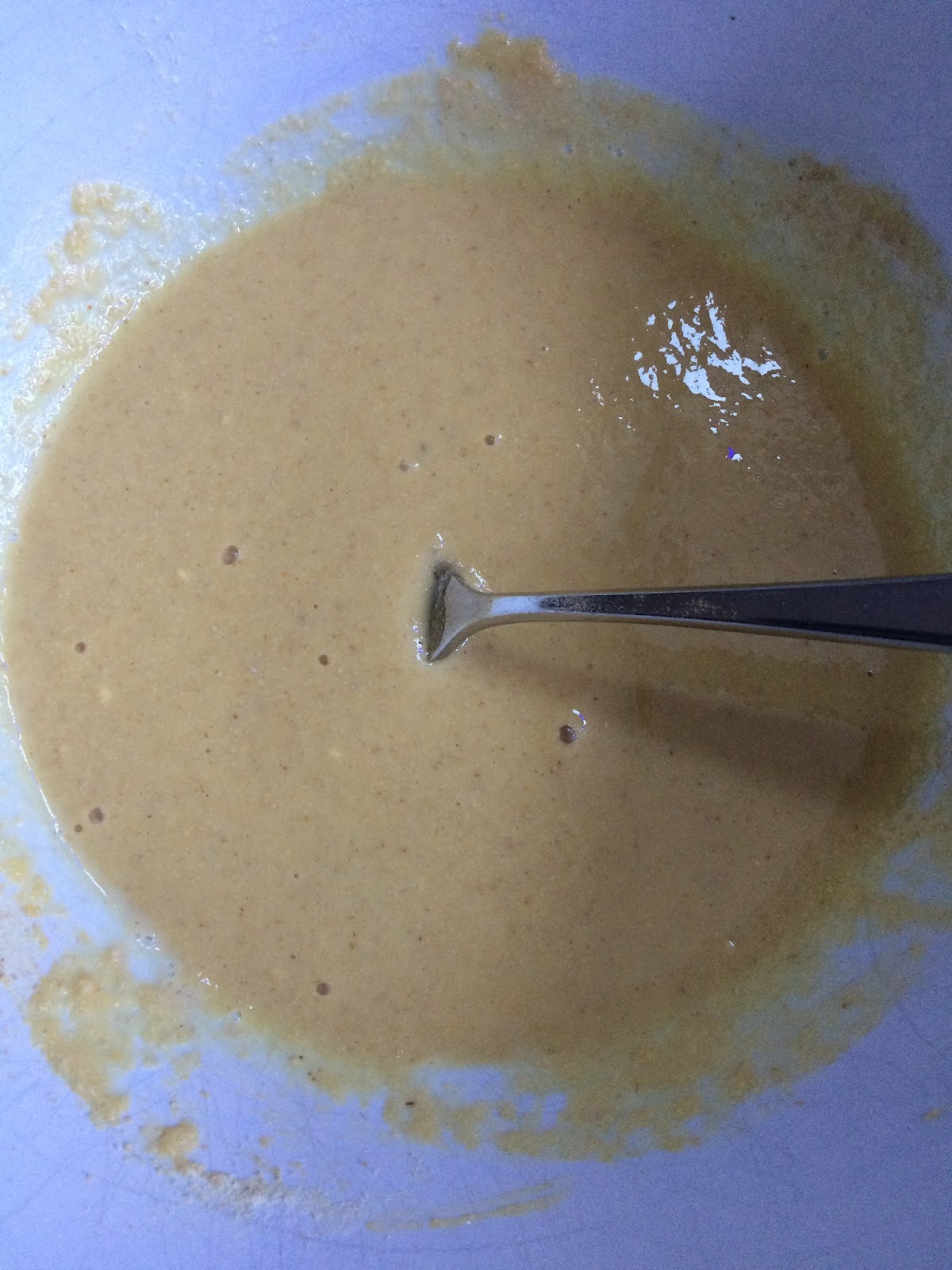
To make the vegan batter I used the liquid from a can of chickpeas, two tbsp of chickpea flour, a good pinch of salt (or two), and the tip of tsp each of ground cumin, ground coriander and ground turmeric.
Then I added the carrot leaves
At this point you can add a chopped spring onion, or some chopped onion, or chives, but since I picked my first onion weeds I added a couple, bulb, stems and leaves, You can also add the flowers, but I kept them for decoration (i.e. to take the photo!).
Spoon into a frying pan with hot vegetable oil and cook on both sides until crispy.
Drain on kitchen paper, sprinkle with salt (optional) and then serve, hot or cold, with a good squirt of lemon juice.
Photos and Recipes by Alessandra Zecchini ©
Thursday, August 4, 2016
Asparagus, spinach and onion weed soup
This soup is vegan and gluten free, and makes use of those onion weeds that grow everywhere in Auckland in spring. Forage the onion weeds from a safe and clean place and wash well. The bulbs are fat and delicious just like spring onions (plus they are free!) and you can also eat the stems, leaves and flowers.
Chop the bulbs, stalks and leaves of a bunch of onion weed and one bunch of asparagus, sauté with a drop of olive oil until fragrant, then add 1 l of vegetable stock and one big potato, peeled and finely sliced. Simmer until the potato is mushy and then add one cup of baby spinach leaves. Blend with an immersion blender and bring back to the boil for one minute. Adjust with salt and pepper and serve, decorated with onion weed flowers.
Photos and Recipes by Alessandra Zecchini ©
Monday, February 1, 2016
Vegan chocolate pudding with strawberries and edible flowers
![]() |
| Arantxa picked flowers from the garden: roses, lavender, sage, violets and nasturtiums |
For 4 puddings:
500 ml oragnic soy milk (I use Vitasoy, either Original, Milky or Calci Plus)
2 tbsp raw sugar
1 heap tbsp cocoa (the better the cocoa the better the flavour, so don't go for cheap baking cocoa, but for 'hot chocolate' quality)
1 tbsp cornflour
Natural Vanilla essence (or a little cinnamon if you prefer)
Strawberries and edible flowers to finish (I have lots of strawberries and edible flowers in the garden now!)
Dissolve the dried ingredients with a little soy milk to make a paste, then add the rest of the milk and mix well. Put on the stove on low and, always stirring, bring to simmering point. Make sure that you stir well, especially around the borders and bottom of the pot, so that the pudding has a smooth consistency. As soon as it start thickening turn the element off, add the vanilla essence (if using) and keep stirring until it has cooled down a bit. Divide into 4 dessert ramekins or small bowls (or teacups) and refrigerate. Cut the strawberries and place over the puddings, then add the petals of edible flowers (I think that maybe there was a bit much here, with lots of lavender, rose and sage aromas… but it was definitely a very perfumed dessert!).
Photos and Recipes by Alessandra Zecchini ©
Labels:
Alpine strawberries,
busy lizzy,
Chocolate,
Creative,
Desserts,
Flowers,
Foraging,
Gluten Free,
Lavender,
Nasturtiums,
Something Sweet,
Strawberries,
Sweet Things,
violets,
wild strawberries
Thursday, January 14, 2016
Tofu with onion weeds
In spring I post lots of recipes with onion weed, and why not: it is free, delicious, and you can eat the flowers too! This one uses tofu, so you can be doubly good to the earth: no meat, and at the same time you forage and get rid off a weed from the garden!
Wash and chop the onion weed (bulbs, stems, leaves and flowers). In a fryipan sauté the onion weed (but keep the flowers aside for later) with a little vegetable oil, and when it smells good add the tofu cut into pieces. Sauté on both sides then add a tbsp or two (according to taste) of soy or tamari sauce, and a tbsp of lemon juice. Cook the tofu on both sides for a few more minutes, then add a drop of sesame oil (optional) and the onion weed flowers. Serve hot.
Photos and Recipes by Alessandra Zecchini ©
Labels:
Asian,
Flowers,
Foraging,
Gluten Free,
Japanese,
Japanese Food,
Lemon,
Mains,
Onion Weed,
soy,
Tofu
Monday, June 2, 2014
Rose Cordial, step by step
If you have roses in your garden, and they have not been sprayed (organic) you can make your own rose cordial, beautiful and pink! The recipe is the same as for the elderberry flower syrup.
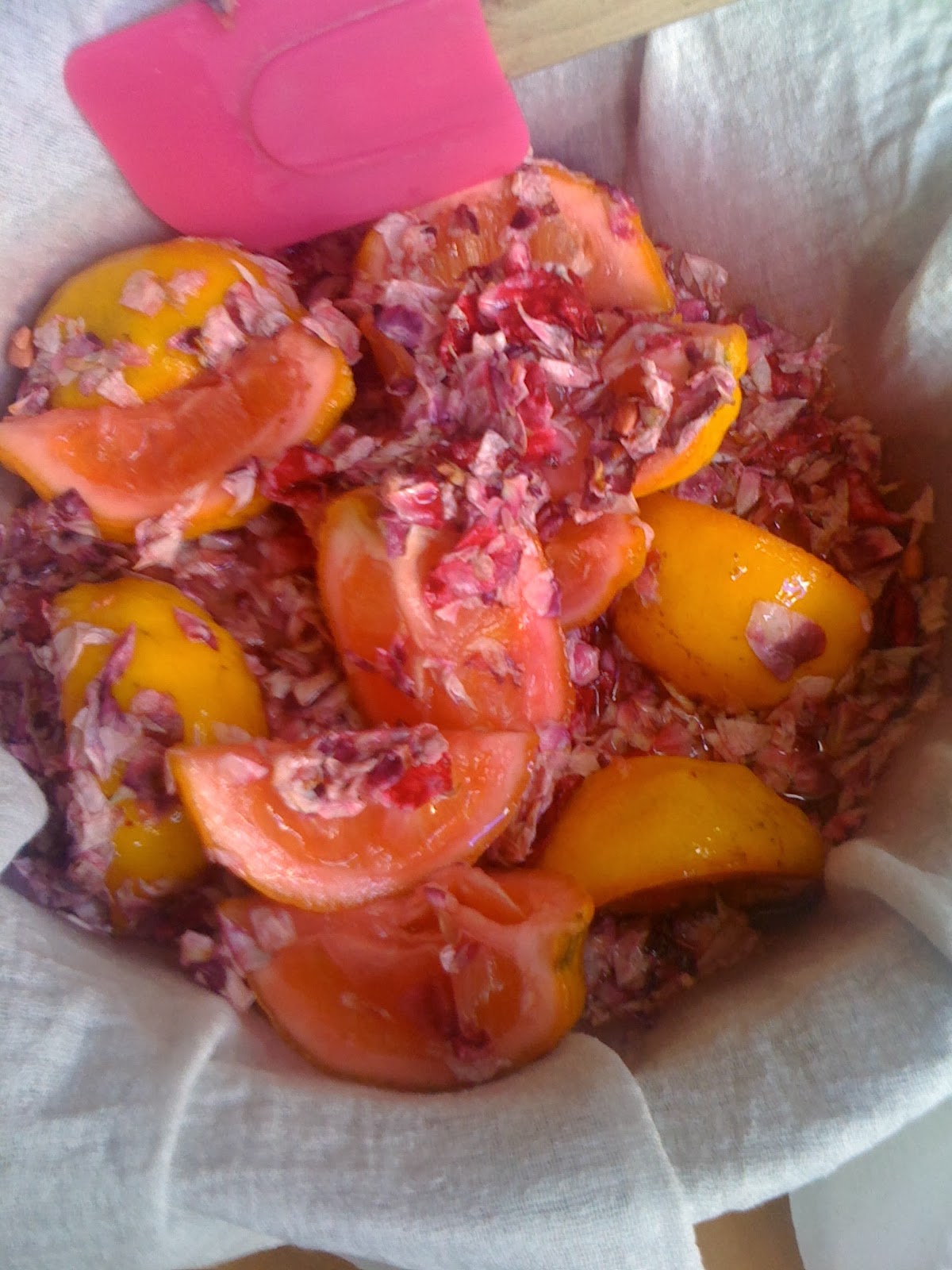
For this you will need 1 l of water, 1 kg of sugar, organic rose petals (at least 1 cup full, but the more the better), 30 g of citric acid and 3 organic lemons. Wash and cut the lemons and put them in a pot with all the other ingredients (or in a large jar, if you have it). Let this mixture stand for three days, stirring from time to time. Don't go over three days or it may ferment.
After this time filter the syrup through a muslin cloth, squeezing the lemons and flowers well.
Boil the filtered syrup for 5 minutes, removing any possible scam forming at the top. Cool down and filter again, through a finer cotton cloth this time (I do this in a funnel directly over the bottles. Use as a cordial for water, or as a syrup for cakes and desserts.
Photos and recipes by Alessandra Zecchini ©
Saturday, May 17, 2014
Elderberry Flowers Syrup and Elder flower Tea
Elderberry Flowers Syrup
For this you will need 1 l of water, 1 kg of sugar, about a dozen elderberry flower heads, 30 g of citric acid and 3 organic lemons (I picked some juicy organic lemons from Regina's garden).
Wash and cut the lemons and put them in a pot with all the other ingredients (or in a large jar, if you have it). Let this mixture stand for three days, stirring from time to time. Don't go over three days or it may ferment. After this time filter the syrup through a muslin cloth, squeezing the lemons and flowers well. Boil the filtered syrup for 5 minutes, removing any possible scam forming at the top. Cool down and filter again, through a finer cotton cloth this time.
Bottle and use as a cordial (it is very thirst-quenching), or to flavour desserts (like panna cottaor blamanche), ice cream, fruit salads and berries.
Elder flower Tea
I am drying the remaining flowers for tea. Dry them in the shade and keep them for winter: the tea is traditionally used to relieve cold and flu, cough and sore tummy.
Photos and recipes by Alessandra Zecchini ©
Subscribe to:
Posts (Atom)